Best Milwaukee Laser Level for UK Trades: 2026 Buyer's Guide
A proper breakdown of Milwaukee's laser level range for British tradespeople — covering green beam tech, M12 battery systems, and which models actually survive UK site conditions. Updated for spring 2026.
Why Choose a Milwaukee Laser Level in 2026?
The Milwaukee laser level range has become a serious contender for UK trades over the past two years. Not just because of the brand name — though that carries weight — but because Milwaukee's done something clever with their measuring tools: they've built them around the same M12 battery platform that powers their drills, impact drivers, and heated jackets.
That's a big deal if you're already invested in the Milwaukee ecosystem. You know what I mean?
The real draw, though, is visibility. Milwaukee shifted their entire laser lineup to green beam technology in 2023, and the difference on a bright site is night and day. I've used red beam levels on summer jobs where the line just vanishes past 8 metres indoors. Green beams? Visible at 15-20 metres without a detector, even with windows letting in natural light.
The UK construction market has responded. Milwaukee's trade-level lasers now sit alongside DeWalt and Bosch Professional as the three brands you'll see most on British commercial sites. Their IP ratings and drop-test specs suggest they've designed specifically for the kind of abuse tools take on a wet Manchester morning — or any British morning, let's be honest.
Green Beam Technology: Why It Matters for Your Milwaukee Laser Level
Green laser diodes operate at 520nm wavelength — right in the sweet spot where human eyes are most sensitive. Red lasers sit around 635nm. The practical difference? You can see a green line roughly 4 times further than red in identical lighting conditions.
For UK trades, this matters more than you'd think.
Indoor Visibility
British commercial fit-outs often involve large open spaces with floor-to-ceiling glazing. Shopping centres, office blocks, schools — all flooded with natural light. A green cross-line laser stays visible at 15+ metres in these conditions. Red? You're reaching for the detector at 8 metres, which slows everything down.
Outdoor Use
Working outdoors in overcast UK conditions (so, most days), green beams remain usable at shorter ranges without a receiver. For setting out garden walls, checking patio falls, or aligning fence posts, you can work at 5-8 metres without any accessories. Try that with red and you'll be squinting.
The Trade-Off
Green beam lasers do consume more battery. Milwaukee's addressed this with their M12 platform — more on that shortly — but a green laser will drain roughly 20-30% faster than an equivalent red model. Worth the extra spend on batteries? Absolutely, in my experience.
The Health & Safety Executive classifies most construction laser levels as Class 2 laser products, meaning they're safe for incidental eye exposure. Milwaukee's green beam models all fall within this classification, so there's no additional PPE requirement beyond common sense.
Milwaukee Laser Level Range: Full UK Comparison Table (2026)
Here's where it gets proper useful. Milwaukee currently offers five laser levels relevant to UK trades, ranging from a compact pocket laser up to a full rotary unit. I've pulled together the specs that actually matter on site — not the marketing fluff.
| Model | Type | Beam Colour | Range (visible / with detector) | Accuracy | IP Rating | Battery | UK Price (approx.) |
|---|---|---|---|---|---|---|---|
| M12 CLL4P-0 (4933479834) | 4-point cross line | Green | 15m / 50m | ±0.3mm/m | IP54 | M12 (12V) | £280-£320 |
| M12 CLLP-0 (4933478100) | Cross line + plumb | Green | 15m / 50m | ±0.3mm/m | IP54 | M12 (12V) | £230-£260 |
| M12 CLL-0 (4933478101) | Cross line | Green | 15m / 50m | ±0.3mm/m | IP54 | M12 (12V) | £190-£220 |
| RCLL-1500G | Rotary | Green | 30m / 500m | ±0.05mm/m | IP67 | M12 / M18 | £1,200-£1,400 |
| L4 CLL-301C | Compact cross line | Green | 12m / 35m | ±0.4mm/m | IP50 | USB-C rechargeable | £130-£160 |
Which Model Suits Which Trade?
Electricians and first-fix sparks: The M12 CLLP-0 with plumb points is your best bet. Plumb-up and plumb-down dots make socket and switch alignment dead simple across multiple walls. The cross line handles trunking runs.
Kitchen and bathroom fitters: M12 CLL-0 cross line. You don't need plumb points for cabinet runs and tile lines. Save yourself £40-50., a favourite among Britain’s tradespeople
Groundworkers and marketrs: The rotary RCLL-1500G is the only sensible choice for setting levels across large areas. 500-metre range with detector means you can set falls on drainage runs across an entire housing plot.
General builders and multi-trade: The M12 CLL4P-0 four-point model covers the most bases. It's the one I'd recommend if you can only buy one Milwaukee laser tool.
M12 Battery Compatibility & Runtime
This is Milwaukee's killer advantage over competitors like Bosch Professional and DeWalt. If you're already running M12 tools — and plenty of UK sparks and plumbers are — you don't need a separate charging setup for your laser. One less thing rattling around in the van.
- M12 2.0Ah battery: approximately 20 hours continuous use
- M12 4.0Ah battery: approximately 40 hours continuous use
- M12 6.0Ah battery: approximately 60 hours continuous use
Those numbers are with all lines active. Switch to single-line mode and you'll roughly double them. In practice, I've never run out of charge on a laser during a working day — even on a 2.0Ah cell. The green beam draws more power than red, sure, but Milwaukee's efficiency management keeps consumption around 0.1A, which is nothing compared to a drill or saw.
The main downside is initial cost if you're not already in the M12 ecosystem. A bare-tool laser plus a 2.0Ah battery and charger adds roughly £80-100 to the price. But if you've got M12 batteries kicking about in your van already — sorted.
Charging on Site
Milwaukee's M12 charger takes about 30 minutes for a 2.0Ah cell and 60 minutes for a 4.0Ah. The rapid charger (C12 RC) cuts that by about 40%. For trades working on sites without mains power, Milwaukee also offers the M12-M18 vehicle charger that runs off your van's 12V socket. Proper handy for early starts before the site generator fires up.
Durability for British Site Conditions
Let's talk about what actually kills laser levels on UK sites. It's not usually a single catastrophic drop — though that happens. It's the combination of moisture, dust, temperature swings, and being rattled around in a toolbox five days a week.
Milwaukee's M12 laser levels carry IP54 ratings across the cross-line range. That means:
- IP5x (dust): Protected against dust ingress — not fully sealed, but enough that plaster dust and brick dust won't kill the optics
- IPx4 (water): Protected against splashing water from any direction
For context, that's better than most Bosch Professional green-line models (typically IP54 as well) and matches DeWalt's mid-range offerings. The rotary RCLL-1500G steps up to IP67 — fully dust-tight and submersible to 1 metre for 30 minutes. Overkill? Maybe. But if you've ever watched a rotary laser get knocked into a flooded trench, you'll appreciate it.
Drop Testing
Milwaukee rates their M12 cross-line lasers for 1-metre drop survival onto concrete. That's the BSI standard test (BS EN 61326-1), and it means a tumble off a standard tripod shouldn't knock the calibration out. I've seen cheaper lasers lose accuracy after a 50cm fall — not ideal when you're relying on ±0.3mm/m precision.
Temperature Range
Operating range is -10°C to +50°C across the M12 laser lineup. That covers every realistic UK scenario — from unheated January site cabins to summer loft conversions where temperatures climb. The self-levelling pendulum mechanism works reliably across this range without sticking or drifting.
My mate who does loft conversions in Leeds swears by his Milwaukee cross-line specifically because it doesn't play up in cold roof spaces the way his old Bosch used to. Anecdotal, sure, but I've heard similar from other trades.
How Milwaukee Stacks Up Against Alternatives
No buyer's guide is complete without honest comparison. Milwaukee isn't the only option, and depending on your situation, it might not be the best one either., popular across England
Milwaukee vs Bosch Professional
Bosch's GLL 50-20G green cross-line is the closest competitor to Milwaukee's M12 CLL-0. Bosch uses AA batteries or a proprietary rechargeable pack — no ecosystem advantage. Accuracy is similar at ±0.3mm/m. Bosch edges it slightly on price (around £170-190) but loses on battery convenience if you're already running M12 tools.
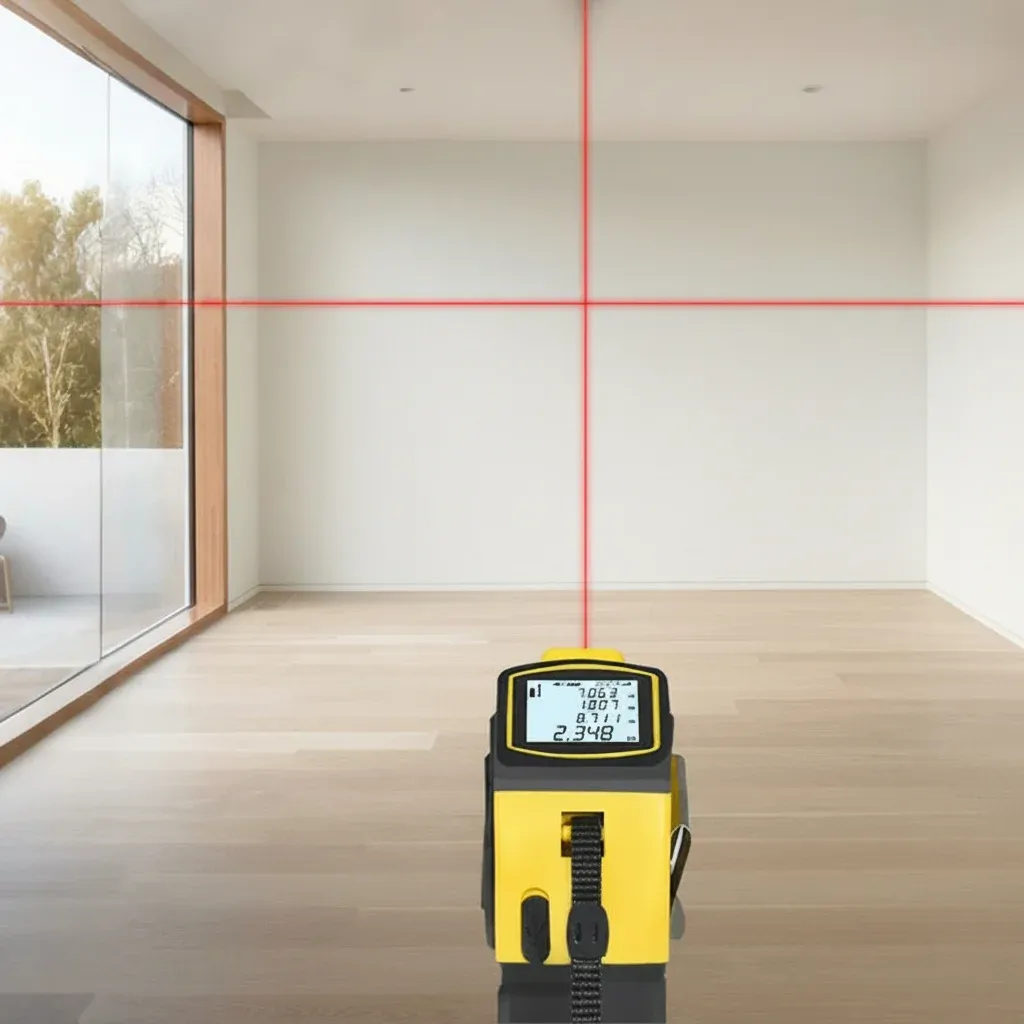
For those after something more entry-level for DIY alignment tasks, the Bosch Atino at £57.03 offers a neat all-in-one solution — it replaces your spirit level and tape measure with one-handed precision. It's not a trade-grade tool, but for quick home jobs it's spot on.
Milwaukee vs DeWalt
DeWalt's DW088K-XJ remains a popular choice on UK sites. It's red beam only in the standard model, which is a significant disadvantage in 2026. DeWalt's green beam options (DCE089D1G) use their 10.8V/12V MAX battery system — a similar concept to Milwaukee's M12 approach, so it really comes down to which battery platform you're already invested in.
Milwaukee vs Huepar / Cigman (Budget Options)
I know the price seems steep when you can get a green cross-line laser from Huepar for £80-100 on Amazon. I've tried cheaper alternatives and they just don't cut it for daily trade use. The accuracy drifts after a few months, the self-levelling becomes sluggish, and the build quality simply doesn't survive van life. You get what you pay for.
That said, if you're a DIYer doing occasional jobs, a budget laser is perfectly fine. For daily trade use where your reputation depends on accuracy, stick with Milwaukee, Bosch Professional, or DeWalt. The Which? buying guides consistently rate these three brands highest for long-term reliability in their power tool testing.
For more measuring and levelling tools suited to both trade and DIY applications, browse the full range at boschll.co.uk — we stock options across multiple price points.
Frequently Asked Questions
Is a Milwaukee laser level worth the money for UK tradespeople?
Yes, for trades already using M12 tools. The battery compatibility alone saves £80-100 on charger setups. Milwaukee's ±0.3mm/m accuracy matches Bosch Professional and DeWalt equivalents, while IP54 protection handles typical British site moisture and dust. Daily trade users recoup the investment within 6-12 months through time saved versus manual methods.
Can I use my existing M12 batteries with Milwaukee laser levels?
All M12-designated Milwaukee laser levels accept any M12 battery from 1.5Ah to 6.0Ah. A standard 2.0Ah cell provides approximately 20 hours of continuous runtime with all lines active. The compact L4 model uses USB-C charging instead, so check the specific model designation before purchasing.
How far can you see a Milwaukee green laser level without a detector?
Milwaukee's green cross-line models are visible to the naked eye at 15 metres indoors under typical lighting. Outdoors in overcast UK conditions, expect 5-8 metres without a detector. With the compatible laser receiver, working range extends to 50 metres for cross-line models and 500 metres for the rotary RCLL-1500G.
Are Milwaukee laser levels waterproof enough for outdoor UK use?
The M12 cross-line range carries IP54 rating — splash-proof but not submersible. Fine for light rain and damp conditions typical of British sites. The rotary RCLL-1500G has IP67 certification, meaning full dust-tight sealing and 30-minute submersion to 1 metre. For persistent outdoor work in heavy rain, the rotary model is the safer choice.
What's the accuracy difference between Milwaukee and Bosch laser levels?
Both brands offer ±0.3mm/m accuracy on their mid-range cross-line models — effectively identical for trade purposes. Over a 10-metre run, that's a maximum deviation of 3mm. Milwaukee's rotary model achieves ±0.05mm/m, matching Bosch's GRL 600 CHV. The practical difference between brands comes down to battery ecosystem and build preferences rather than precision.
Do Milwaukee laser levels need calibrating, and how often?
Milwaukee recommends annual calibration checks for trade-use laser levels. Most UK tool repair centres offer this service for £30-50. After any significant drop (over 1 metre), check calibration immediately using the two-point wall test method. Signs of drift include visible line curvature or inconsistent measurements when the laser is rotated 180 degrees on its mount.
Key Takeaways
- Best all-rounder: The Milwaukee M12 CLL4P-0 four-point cross-line (£280-320) covers the widest range of trade applications with ±0.3mm/m accuracy and IP54 protection.
- Battery advantage is real: If you're already running M12 tools, a Milwaukee laser level adds zero charging infrastructure — a 2.0Ah cell gives 20+ hours of runtime.
- Green beam is non-negotiable in 2026: With 4x visibility over red, there's no reason to buy a red-beam laser for indoor trade work anymore.
- UK weather handled: IP54 rating on cross-line models and IP67 on the rotary means British rain and site dust won't kill your investment.
- Price reflects ecosystem value: Milwaukee lasers cost 10-20% more than equivalent Bosch models, but the M12 battery sharing justifies the premium for existing Milwaukee users.
- Calibration matters: Annual checks (£30-50) protect your accuracy guarantee — don't skip them if you're relying on these tools for paid work.
- Budget alternatives exist but compromise: Sub-£100 lasers work for occasional DIY but lack the durability and long-term accuracy stability needed for daily trade use.
Ready to upgrade your toolkit with BoschLL?
Get Yours Now — £42.28